Tuesday, 11 April 2017

Island teams hindered by location?

This past weekend Las Palmas won again at home with a 4-1 success over Real Betis. The result took Las Palmas onto thirty-eight points for the season. However things aren't as rosy when Las Palmas are away from the Canary islands. Of that thirty-eight points total, only six have come away from home. So are Las Palmas and other island clubs hindered by their location?

Las Palmas are the only island team competing in La Liga this season. The other big Canary island club, Tenerife, are challenging for promotion from Segunda. Tenerife haven't been in the top division since 2009-10 and since then have even spent time in the third tier. The Segunda this season also features Real Mallorca, although that might not be the case next season given the Palma club are struggling badly. No island team has ever won La Liga and Mallorca were the only one to qualify for the champions league back in 2001-02.

Over in Serie A it is all but mathematically confirmed that the island of Scilly will be without representation next season. Palermo's paltry total of fifteen points has them slipping into Serie B. Oddly however, Palermo have won twice as many points away from home this season with ten collected.

Barring a drastic combination of results, Sardinia's Cagliari will be hanging around the top division next season. They have won twice as many points at home than on their travels this campaign. Back in Scilly, this season could've featured two sides from the island had Trapani overcome Pescara last season. Trapani now find themselves engulfed in a relegation dogfight in Serie B.

Unless Corsica's SC Bastia can avoid slipping through the Ligue 1 relegation trap door this season, next season will be the first since 2010-11 that there will be no Corsican involvement in Ligue 1. Of Bastia's twenty-eight points, ten have come away from the Mediteranean island. Arch-rivals AC Ajaccio are mid-table in Ligue 2 with the majority of their thirty-nine points coming at home. The tiny Gazélac Ajaccio are also in mid-table after their debut top flight campaign last season.

The Portuguese archipelago of Madeira last season had three top division clubs. Next season it could very well be just one. Nacional currently occupy seventeeth place in the Superliga. There is no significant difference in their home and away records this season. Funchal rivals Maritímo however do have a significant difference. Their home record has yielded more than twice as many points than on their travels. Such a record sees them sitting in sixth.
União da Madeira find themselves fourth in the segunda and like Maritímo there is a twenty point difference in favour of their home record.
The only Azores side in Portugal's top two divisions, Santa Clara have won twelve more points at home than on their travels. The club however last graced the top flight in 2002-03.

In Greece there aren't many island teams in the Super league. Historically it was usually OFI Crete and Ergotelis in the top division but just the one Crete team features in the top flight this season and that's Platanias. Their home record is almost twice as good as their away record which places them in seventh place. No Crete club has managed to win the national title.
The holiday island of Corfu has PAE Kerkyra competing in the top flight this season after promotion last term. The club was formed from a 2013 merger of AO Kerkyra and Kassiopi FC. Last season Lesbos club Kalloni were relegated from the Super league and this season look like taking the drop into the third tier. Crete clubs OFI and Chania also feature in the second tier with the latter battling the drop.

Island teams across Europe have tended to struggle. In fact only twice have island clubs managed to wrestle the title off the mainland in Europe with Cagliari in 1970 and IFK Mariehamn's title win last October in Finland's Veikkausliiga. The logical and simplistic conclusion is that their island location hinders the chances of success. There are a myriad of reasons why, one of which is money. In a lot of cases these teams spend more on travel costs than anyone else in their leagues. Money that mainland teams can spend on players. The travel expenditure also deprives money to keep star players at these clubs. For example Las Palmas couldn't afford local talent such as David Silva, Juan Carlos Valerón, Jesé Rodríguez, Mauro Icardi and Sandro Ramírez, who all left the island at young ages.

As we have also seen with some teams, their records on their travels are significantly poorer than their home records which translates to rarely higher than mid-table finishes. If the away records could be improved then perhaps these clubs could buck the struggle trend associated with island teams.

Tuesday, 4 April 2017

At least we'll be in the next one

The recent international window all but sealed the hopes of Qatar making their world cup debut in Russia next year. Sucessive 1-0 defeats to Iran and then Uzbekistan leaves the maroons bottom of their world cup group with a very remote opportunity of making the play-offs. Automatic qualification is mathematically beyond them after the latest results.

Their impending elimination will mean Qatar in 2022 will be the first world cup hosts to have never qualified prior to hosting. There was genuine hope in the country that they had a decent chance of making it to Russia. The ease of which they qualified through round three of the Asian world cup qualifiers only fuelled those hopes.

Three defeats from their opening three games in the final group stage was just making the task near on impossible to recover. Uruguayan Jorge Fossati was drafted in as manager at this stage to try and rescue a campaign that was unravelling at an alarming rate. A 1-0 win at home to Syria at least got them off the foot of the group. A 2-1 victory over an experimental Russia in a November friendly seemed to restore some confidence. A game that saw them fall behind to an early Aleksander Kokorin penalty was rescued when Boualem Khouki converted a penalty of his own. Karim Boudiaf's second half strike being enough after Kokoron missed a late penalty.

Two decent results that were undone by a largely frustrating 0-0 stalemate away in China. A result that suited neither side that were attempting to rescue fading world cup hopes. Since that November qualifier, two very underwhelming results in friendlies against Moldova and Azerbaijan followed. Then came this international window of two further defeats.

At the time of writing, Fossati is still in charge and in defence of the Uruguayan it was an uphill task to rescue the campaign after that nightmare start. If anything this campaign has only highlighted just how short the team is of making any inroads for qualification, under the current format. The positives for Qatar are that, in theory at least, qualification for future world cups get easier. January's announcement of a forty-eight team world cup from 2026 was good news for Asia and the likes of Qatar but a lot of work is still required to ensure the team is of the required standard to qualify.

How they go about obtaining that standard is anyone's guess. Their favoured approach of using naturalized players from the domestic league has thus far fallen terribly short. It is also a strategy heavily critised by local media and fans with a 'lack of passion' being branded about recently.

The money the country has poured into youth developement programmes is yet to unearth a wealth of talent, if you excuse the pun. Young attacker Akram Afif is the first Qatari to play in La Liga with Sporting Gijón but with their home world cup less than six years away, a few more players like Afif will need to be developed.

Authorities in Qatar and the football association will be looking to make an impact at their home world cup but the present campaign doesn't bode well for those plans. Drawing with China at this moment in time is where Qatar are at in Asia. Their failure to qualify for 2018 could be a blessing in disguise to give them a reality check but at least they'll be at the next one.

Wednesday, 29 March 2017

Fine margins of the Genk Europa League run

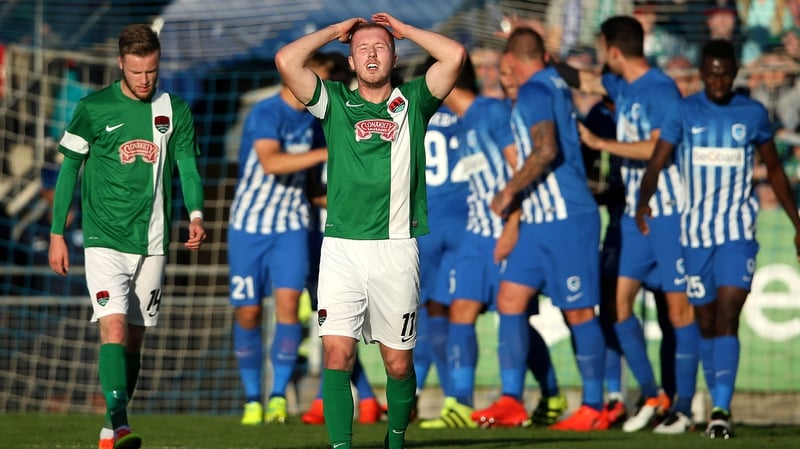
Genk score a killer away goal in Cork
It was a sogey, windy night in Cork on July 21st 2016, however it was also a momentus evening as Cork City had just eliminated Swedish cup holders BK Häcken from the Europa League. We had set up a dual with Belgians K.R.C Genk, or so we thought. They were facing Montenegrin side FK Budućnost. Genk were 2-0 up from the first leg but the return leg was gone to penalties after the hosts from the Adriatic roared back with first half goals. Genk rode their luck as they also were reduced to ten men with Bernard Kumordzi seeing red late on. In the shooutout missed spot kicks from Momcilo Raspopović and Luka Mirković saw Genk squeeze through. There was to be no amending flights on my part to Podgorica.

After those events it was City v Genk in a two legged tie. I can still remember that first leg in the Luminus Arena. I was actually gutted City didn't take a draw. The game was lost to a first half goal from Leon Bailey, more on him later. Certainly the best City performance that I can remember. My pre-match prediction of 6-0 Genk thankfully not coming to fruition. Genk unfortunately were clinical in the second leg at a sunny Turner's Cross. Goals from Thomas Buffel, a lovely finish, and Sebastien Dewaest, a powerful header saw them through. We did score later in the game through captain Alan Bennett but bowed out 3-1 on aggregate.

City's European run was over and Genk's was to continue for months yet. However I don't think even the most ardent Genk fans could foresee the events of the next eight months unfolding.

Genk would make the group stage by despatching Lokomotiva Zagreb, or if you want to be cynical Dinamo Zagreb's B team, 4-2 on aggregate in the next round. It would be in the group stage that Genk would shock a quality Athletic Bilbao side with a 2-0 win at the Luminus Arena. A 5-3 defeat at San Mamés barria would hit headlines with Aritz Aduriz scoring all five home goals but Jamaican winger Leon Bailey scored a stunner to alert Europe of his talents. In a group also featuring Italians Sassuolo and Austrian side Rapid Wien, Genk would finish top, comfortably going through to the final thirty-two in the new year.

They would be paired with fellow surprise package Astra Giurgiu of Romania but before that tie there was some big off the pitch changes. Firstly manager Peter Maes was sacked for very inconcistent domestic form. Form which left them in mid-table in the Pro League despite their polar opposite European form. Taking over was Albert Stuivenberg but he would be dealt two big blows in the January transfer window. Midfield powerhouse Wilfred Ndidi was sold for £15 million and then on the final day of the window, Leon Bailey was sold to Bayer Leverkusen for £12 million.

The appointment of Stuivenberg would lead to an improvement in domestic results and it would also see Genk progress further in the Europa League. A 2-2 draw in Romania was followed up by a 1-0 success at the Luminus Arena. Genk were now into the last sixteen and the draw would produce a very familiar opponent. An all-Belgian tie as Genk were pitted against K.A.A Gent.
Genk took full of advantage of that familiarity hitting Gent on the counter. A resounding 5-2 win away which also saw Gent reduced to ten men, providing the platform for the passage through to the last eight. A second leg draw completed the job and now the belief and confidence was sky high if it wasn't already.

The quarter-final draw made the day after that second leg draw with Gent produced anothet trip to Spain, this time to Celta de Vigo. A place in the semi-final of the Europa League at stake. A prospect that few would've envisioned. The first leg is scheduled for April 13th at the Estádio Balaidos with the home leg a week later.

To think this run was all built upon after those two missed penalties in Montenegro on that humid night back in July. Fine margins.

Tuesday, 21 March 2017

Worst Serie A relegation battle ever?

Usually at this time of the season the battle to remain competing in the top division intensifies. However this season in Italy's Serie A it could be argued that the battle never started in the first place. After twenty-nine rounds the bottom three are well adrift of everyone else. Sixteenth placed Genoa are fourteen points clear of the drop zone and are practically safe.

In the bottom three are Pescara, Crotone and Palermo. All three have occupied the relegation spots since week twelve. Crotone are playing in their debut season in the top tier but it has proven to be a very difficult step up. Pescara, also newly promoted this season are currently bottom with a paltry twelve points from twenty-nine outings. Pescara sacked the man who guided them to promotion, Massimo Oddo, in February. Despite Zdenĕk Zeman coming in, he hasn't been able to turn the sinking ship around. Crotone lost promotion winning manager Ivan Jurić last summer but haven't sacked his replacement, (not yet anyway), Davide Nicola. Palermo meanwhile are onto their third manager of the season.

This season, unless a massive swing in results is shown, will see the lowest points total for the teams going down with the flip side of that being the lowest points tally for many a year to stay up. For example seventeenth placed Empoli have currently accumulated twenty-two points, in any other season they would be engaged in an intense battle to stay up, yet they are seven points away from trouble. Last season eighteenth placed Carpi went down with thirty-eight points and even Hellas Verona, as awful as they were managed twenty-eight points in the end.

Since being expanded to twenty teams in 2004-05, with the exception of Parma in 2014-15, no team in the bottom three has finished with less than twenty-one points. At the moment it is difficult to forecast any of the bottom three matching that total yet alone surpassing it with just nine games remaining. Since the expansion the average number of points to stay up in Serie A is thirty-five, which only highlights further how poor this season really has been at the bottom. Twenty-six being the average tally for clubs finishing bottom.

The struggles of the bottom three have led to some people in Italy to argue that the league should revert back to the eighteen team format that was in use for two decades up until 2003-04. The argument is that Palermo, Crotone and Pescara are just not up to the required standard and that their struggles make the league uncompetitive. While it is absolutely the case that none of them are good enough this season, it is very much an outlier to have all three relegation sides so weak. No trends or conclusions can be drawn from this season. If a similar pattern unfolds next season whereby the bottom three are so far adrift of everyone else then perhaps a change in format will be required.

With the eighteen team format being suggested, I had a look at the league standings from the last time that format was used in the three points for a win era. From 1994-95 until 2003-04 Serie A relegated four clubs each season. In that ten season period, six sides failed to gain more than twenty points. The average point total to stay up was thirty-six. If only three were relegated that figure would drop to thirty-two points, putting it just three points behind the average needed to stay up in the twenty-team format.

1994-95 saw both Brescia and Reggiana relegated well behind everyone else. In fact Brescia's atrocious tally of twelve points is the lowest point total in the three points for a win era. Reggiana registered just six more points. So even the eighteen-team format featured sides that simply were not good enough. Although saying that there wasn't a season were all the relegated sides were so far apart from the rest of the league like the current campaign.
The figures do support the claim that this season is the worst relegation battle in Serie A for many a season.

Tuesday, 14 March 2017

The distortion of European leagues by UEFA prize money

Every season UEFA shells out north of a billion euros in prize money to clubs that participate in European competition. For example winning the champions league this season will result in the club earning upwards to €100 million while an appearence in the first qualifying round generates €200k. Obviously winning the champions league for the big clubs is the ultimate aim that makes or breaks a season but the aim of this post is to look at the smaller clubs and how the prize money from Europe can have a big impact on domestic leagues. €200 - 500k isn't anything to Real Madrid but to say Crusaders in Belfast it is a game changer.
The impact of European prize money is seen right across Europe and it is positive and negative. For certain leagues the prize money from European results dwarfs domestic prize money enabling clubs to form duopolies and monopolies in leagues. Let's have a look at some examples.
BATE Borisov in 2008 became the first Belorussian team to qualify for the champions league group stage. This gave them access to the estimated €7 million base fee for qualifying. They would end up qualifying on four further ocassions building up enough funds for a lasting period of dominance. The club now play in a 13,000 all seater stadium, to the envy of all other clubs and last October secured their eleventh consecutive league title. BATE's breakthrough and subsquent domination has led to some other sides trying to make inroads in Europe with Dinamo Minsk reaching the Europa league group stage. However such domination has rendered the league uncompetitive.
Dinamo Zagreb's grip on Croatian football has rarely been threatened since 2006. Winners of the past eleven league titles, Dinamo's dominance can be attributed to European prize money and the sales of players to richer clubs. Financially they can't be challenged domestically. That said HNK Rijeka are doing their utmost this season. Opetating on a fraction of Dinamo's budget, Rijeka will be looking for a European run in the champions lesgue next season to keep them near Dinamo. Rijeka however are the only side to come remotely close to challenging Dinamo in recent years.
Another league to see a negative affect on competitiveness is the Swiss super league. FC Basel have been the flagship club in European competition for many years. They reached the champions league last sixteen in 2014 and their runs in the Europa league have helped assert domestic dominance. This season will see them clinch their eight successive league title. Again European prize money as well as player sales from European exposure are major contributers to Basel's dominance.
Smaller leagues to have felt a major change include Bulgaria where Ludogorets Razgrad are strolling to a sixth title in succession. In that period they have qualified for the lucrative champions league group stage twice. Would be challengers CSKA Sofia have spent time in the lower leagues and Levski are struggling to bridge the gap.
In Wales, The New Saints recently sealed a sixth title in a row with no threat. The annual champions league sojourns have seen them uncatchable domestically. Olympiacos have held a vice-like grip on the title in Greece for the past six seasons as have APOEL Nicosia in Cyprus who have designs on a fifth title streak this season.
Leagues that are beginning to develop monopolies and duopolies are seen in Ireland and Northern Ieeland. In the North, Crusaders are almost home and hosed for a third title in succession. Access to the champions league money annually has helped them keep ahead of Linfield and Cliftonville. Down south, Dundalk, champions for the past three seasons, will be looking to use the European money to cement their position at the zenith of Irish football. Challengers Cork City have formed a duopoly with three successive second place finishes in that time. Scotland sees Celtic well clear over the horizon with a sixth title in a row almost officially confirmed.
The Azeri league is an example where European money has formed a duopoly. Both Qarabağ and Qəbələ have reached the Europa league group stage in successive seasons enabling them to pull away from the rest of the league. Long term duopolies can be found in Russia (CSKA Moskva & Zenit St Petersburg), Serbia (Crvena Zvezda & FK Partizan), Portugal (Porto & Benfica) and Ukraine (Shakhtar & Dynamo Kyiv).
However it isn't all doom and gloom. Even long standing domination can be dismantled. In Albania last summer Skënderbeu Korçë were denied champions league entry which allowed Partizani Tirana to close in financially. With Kukësi upping their game as well the title race this season is a three team tussle. Norway had a period of competitiveness after Rosenborg's dominance fell in 2005. Three different sides have since claimed the title. Latvia saw the same when Skonto Riga's run came to an end. In Moldova, Sheriff Tiraspol had their streak ended and two clubs claimed maiden titles. The leagues in Poland, Slovakia, Hungary and Sweden remain fairly competitive in recent years going by past winners and the events of this season.
European money tends to have a greater impact on leagues outside the so called big western leagues, as we have seen in the past few years where the European money has increased significantly. There is enough examles around Europe to suggest that the prize money from UEFA is distorting leagues to an uncompetitive state.

Tuesday, 7 March 2017

APOEL Nicosia - Five years on

It was this night five years ago, March 7th 2012 that history was made in the Cypriot capital of Nicosia. APOEL were welcoming experienced champions league campaigners Lyon to the national GSP stadium for the second leg of their last sixteen tie. History was already written getting this far but this night offered the chance to create even more and consolidate the club's place in a wonderful story of achievement. APOEL trailed 1-0 from the first leg but that deficit was closed within ten minutes in Nicosia. The hosts would go on to hold their nerve to emerge victorious on penalties with veteran keeper Dionisios Chiotis saving two Lyon penalties. APOEL on this night became the first Cypriot team to reach the quarter-finals of any European competition and of course this being the biggest of them all, the champions league.

Fast forward five years and APOEL are preparing for a Europa league last sixteen tie with Belgian powerhouse Anderlecht. Two games away from another quarter-final appearance. Sure it may not be the champions league but for APOEL to reach this far is a fantastic achievement. It has been a long journey for the club who started in the champions league qualifiers back in July.

Not many will have foreseen such a run being put together after they drew a blank in Oswestry, England against The New Saints. A 3-0 win in the home leg ensured progression but the Welsh team made them work for it for long periods. Norway's Rosenborg were next up and another first leg slip, a 2-1 defeat in Trondheim. Home conditions and an epic finale in the second leg saw APOEL fire three past Rosenborg in stoppage time. That late drama set up a play off round tie with another Scandinavian opponent in FC København. Yet again they failed to win the first leg, losing 1-0 and the Danes held out for a draw in Cyprus to edge through leaving APOEL with the Europa league.

The group that featured Astana, BSC Young Boys and the headline draw of Olympiacos provided an opportunity. An opportunity that was grasped with both hands. Victories over Olympiacos home and away provided the platform to the Cypriots topping the group by four points.

The first knockout round beckoned and it provided a massive stern test against Athletic Bilbao. A monumental effort would be required to get past the Basques. A thrilling first leg ended with a 3-2 reverse but the key positive was the pair of away goals scored by Giorgios Efrem and Yannis Gianniotas. Nobody could've foresaw the second leg events. APOEL stunningly saw off the seasoned Bilbao 2-0 in Cyprus as a Pieros Sotiriou volley and a Gianniotas penalty gave them a first ever victory over Spanish opponents in fifteen attempts.

A European run from England-Norway-Denmark-Greece-Kazakhstan-Switzerland and Spain sees the next stop in Belgium. It won't be easy against Anderlecht and they will be without their talisman Sotiriou as he was sent-off in that win over Bilbao.

Should they get through Anderlecht, APOEL will be the only Cypriot club
to make two European quarter-finals. Their European run has coinsided with their quest for a domestic double. Currently leading the Cypriot first division as it enters the split, APOEL are also still involved in the cup which sees them face AEL Limassol over two legs next month. These next few weeks could see then break new ground on a European scale while also reaffirming their domestic dominance.

Wednesday, 1 March 2017

Eastern Europe's champions league struggles

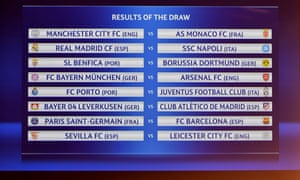
The last sixteen draw with no eastern representation
Source: Fabrice Coffrini Getty images
When the draw for the last sixteen of the champions league was made last December there was one glaring fact that was missed by a lot of the media. No eastern European teams. That's right, no team east of Germany/Italy had progressed to the knockout stage. This despite having six sides in the group stage (seven if you want to include Turkish teams). Of the six teams only half progressed to the Europa league after Christmas with CSKA Moskva, Dynamo Kyiv and Dinamo Zagreb finishing bottom of their groups.
This is the first time the knockout stage has been without an eastern side since the 2008-09 edition. In the years since that last knockout stage absence only four different clubs have made the stage (CSKA Moskva, Dynamo Kyiv, Shakhtar Donetsk and Zenit St.Petersburg). The statistics don't make for good reading. Only twice in that period has more than one eastern club made it through the group stage (2015-16 & 2011-12). While this season is the first in nine with no eastern progression you need to go back to 2011 for the last eastern quarter-finalist, which was Shakhtar Donetsk. You need to go back to 1998-99 for the last eastern semi-finalist which was the terrific Dynamo Kyiv side that featured Serhiy Rebrov and Andriy Shevchenko.

So is there cause for concern by this year's absence? Yes and no. It does highlight the decline of eastern European football not having sides progress but the wider issue is that eastern European football has been left behind by the richer leagues in the West. The 'no' part is that for the majority of the last decade at least one side has made the knockout stage with two quarter finalists produced in the same period. One drab year doesn't constitute a crisis but this does depend on next season's results before any trends or conclusions can be drawn upon.

A trend or conclusion that can be drawn upon however is that when it comes to the champions league, eastern sides can't progress deep into the competition. The reason for this is obvious with the west significantly richer and stronger than the east with the best players competing with western teams. While the likes of Zenit and Shakhtar have spent big money on certain players they don't have the finance to build teams capable of competing for continental honours like their western counterparts.

The lack of homegrown talent being produced is another significant factor in the eastern struggle. Under the guidance of the legendary Valery Lobanovskiy, that Dynamo Kyiv team that reached the semi-final in 1999 was entirely comprised of eastern European players. Shakhtar Donetsk reached the quarter-finals in 2011 with a predominantly Brazilian base of players.

In Russia the lack of quality coming through is seen in the mediocre performances from the national team in the last two tournaments. Elsewhere in eastern Europe the situation gets more bleak. The last eastern continental champions were Crvena Zvezda in 1991. They haven't graced the finals of the champions league/European cup since 1991-92. Their demise in Europe can be strongly attributed to the demise of Yugoslavia. No longer were they competing with the best in the Balkans domestically but only within Serbian borders with weaker opponents. Rivals FK Partizan reached the final in 1966 but have only reached the group stage twice without ever progressing.
Over in Romania, former winners Steaua Bucuresti have struggled to come remotely close of threatening to replicate that feat. They have never progressed beyond the group stage in the current format.
Bulgaria have only qualified thrice and are yet to get beyond the group stage. Belarus, Croatia, Hungary, Slovakia and Slovenia are all yet to get sides beyond the group stage. Poland this season had Legia Warszawa qualify for their first representative in twenty years.
Outside of Russia and Ukraine it is the Czech republic who have put up some decent showings in the champions league. Sparta Praha did at the turn and beginning of the millennium reach the then second group stage on a number of occasions. Since 2004 no Czech side has reached the last sixteen.

So can an eastern European side ever win the champions league? I have to be blunt and say no chance. Not under the current format. The money is too heavily concentrated in western Europe with the best players. Simply put the successes of Steaua and Crvena Zvezda were achieved in a far more level playing field and it is simply impossible to imagine any eastern European side including the likes of Zenit and Shakhtar to be lifting the trophy. Even getting to the quarter-finals is becoming an increasingly distant and difficult task, let alone competing for the trophy.